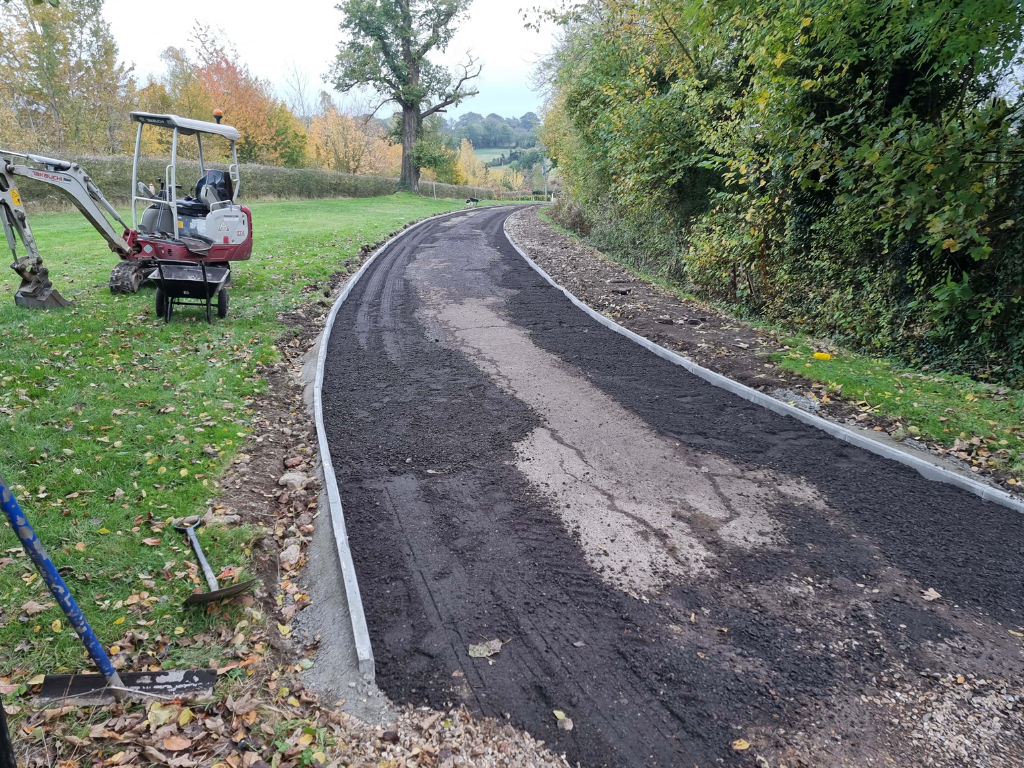
Tarmac Driveway Installation: Why Is Ground Preparation So Important?
A professionally laid tarmac driveway may look relatively simple from the surface, but much of its long-term performance depends on work that is no longer visible once installation is complete. Before the tarmac is laid, the ground needs to be prepared carefully so that the finished driveway has a stable, well-compacted foundation capable of supporting regular use.
For homeowners in Loddon, Norfolk, ground preparation should be regarded as one of the most important stages of tarmac driveway installation. If the underlying construction is inadequate, even a well-finished surface can eventually develop problems such as settlement, cracking, uneven areas and poor drainage.
A Tarmac Driveway Is Only as Good as Its Foundation
Tarmac forms the visible wearing surface, but it does not work independently.
The layers beneath it provide the support needed to distribute loads and maintain consistent levels. When vehicles repeatedly pass over or park on the driveway, these underlying layers help prevent excessive movement.
Proper preparation creates a stable platform for the tarmac. Without it, weaknesses below the surface can eventually become visible above.
This is why professional driveway construction begins with the ground rather than the final finish.
Existing Ground Conditions Need to Be Assessed
Every driveway site is different.
Before installation begins, the existing area should be assessed to understand what is already beneath the proposed surface and whether unsuitable material needs to be removed.
Important considerations can include:
- Existing surface condition
- Ground stability
- Soft or weak areas
- Required finished levels
- Drainage requirements
- Intended vehicle use
- Connections with surrounding surfaces
This initial assessment helps determine how the driveway should be prepared rather than applying exactly the same construction approach to every property.
Correct Excavation Creates Space for the Driveway Structure
Ground preparation often requires excavation before new materials can be installed.
The purpose is not simply to remove the existing surface. Sufficient space needs to be created for the supporting layers and tarmac while still achieving the correct final level.
Inadequate excavation can compromise the amount of supporting material beneath the surface. Excessive or inconsistent excavation can also create unnecessary variations that need to be corrected.
Careful preparation establishes a controlled starting point for the remainder of the installation.
Why the Sub-Base Matters
The sub-base is one of the most important structural elements beneath a tarmac driveway.
Its role is to create a firm, stable foundation that helps distribute the pressure created by vehicles and everyday use.
A properly prepared sub-base contributes to:
- Surface stability
- Consistent support
- Resistance to settlement
- Accurate levels
- Long-term driveway performance
If the sub-base contains weak or poorly compacted sections, movement can occur beneath the tarmac.
The visible surface may initially look satisfactory, but defects can develop later as the underlying construction settles.
Compaction Is Essential
Simply placing sub-base material into the excavated area is not enough.
The material needs to be compacted thoroughly so that it forms a dense and stable foundation. Proper compaction reduces unnecessary movement within the supporting layers.
This stage requires particular attention because poorly compacted areas can settle differently from the rest of the driveway.
Uneven settlement can eventually contribute to:
- Depressions
- Cracking
- Surface movement
- Low spots
- Irregular levels
Professional preparation aims to create consistent support across the entire driveway rather than leaving individual weak areas beneath the surface.
Soft Ground Should Not Simply Be Covered
One of the most important principles of driveway preparation is that obvious weaknesses should be dealt with before the surface is installed.
If a section of ground is soft or unstable, simply covering it with new construction materials does not necessarily remove the underlying problem.
The affected area needs to be assessed and prepared appropriately so that it can support the driveway above.
Failing to address localised weaknesses can result in one part of the driveway settling while surrounding sections remain stable.
This is often how isolated depressions and uneven areas begin to develop.
Ground Preparation Helps Prevent Future Sinking
Sunken areas are a common sign that something beneath a driveway has changed.
Although several factors can contribute to settlement, inadequate preparation or insufficient support can leave a surface more vulnerable to movement.
A correctly prepared foundation helps spread vehicle loads through the driveway structure rather than allowing excessive pressure to concentrate on weak sections.
This is particularly important in areas where vehicles regularly park, turn or follow the same route across the surface.
Drainage Needs to Be Considered Before Tarmac Is Laid
Water management should form part of the driveway design from the beginning.
Once the tarmac has been installed, correcting poorly planned levels can become considerably more disruptive. It therefore makes sense to establish suitable falls and drainage arrangements during the preparation stage.
The driveway should be constructed so that rainfall does not unnecessarily collect in low areas.
Poor preparation can result in:
- Persistent puddles
- Water collecting near edges
- Uneven surface drainage
- Saturated surrounding ground
- Localised areas remaining wet for longer
Careful levelling during ground preparation helps the finished surface manage rainfall more effectively.
Accurate Levels Improve Everyday Use
A driveway should not only be structurally stable; it should also provide a practical transition between the property and surrounding areas.
Ground preparation allows the installer to establish appropriate levels before the final surface is laid.
This can help create smoother connections with:
- Existing entrances
- Paths
- Parking areas
- Garage approaches
- Other adjoining surfaces
Small differences in level can become particularly noticeable once a continuous tarmac finish has been installed, which is why accuracy at the preparation stage matters.
Edges Need Proper Support
The perimeter of a driveway deserves the same attention as the centre.
Tarmac needs appropriate edge support to help maintain the intended shape and prevent vulnerable perimeter areas from deteriorating prematurely.
Edge details should therefore be considered during preparation rather than treated as an afterthought once the main surface is complete.
A well-defined edge also contributes to the appearance of the driveway by creating a cleaner transition between the tarmac and surrounding garden or landscaping.
Vehicle Use Influences the Required Preparation
Not every driveway experiences identical demands.
The supporting construction needs to be appropriate for how the finished area will actually be used. A driveway repeatedly carrying and supporting vehicles requires a stable foundation capable of handling those loads consistently.
Particular attention may be needed in areas where vehicles:
- Regularly park
- Turn
- Brake
- Enter and leave
- Follow the same wheel paths
Understanding these patterns during planning helps ensure the ground preparation is appropriate for the intended use.
Poor Preparation Can Affect a Large Area
One of the difficulties with inadequate groundwork is that problems may not remain confined to one small spot.
Movement beneath one area can influence adjoining sections, particularly where cracks or changes in level begin developing.
A defect that starts as a slight depression can eventually affect how water moves across the driveway or how vehicles pass over the surface.
This is why getting the construction right before tarmac is laid is preferable to trying to correct avoidable defects afterwards.
The Finished Surface Cannot Correct a Weak Foundation
A smooth layer of tarmac can temporarily disguise inconsistencies underneath, but it cannot make an unstable base structurally sound.
The surface follows and relies upon the supporting construction.
If the base moves, settles or lacks adequate support, the tarmac above may eventually reflect those changes.
This is an important reason to judge driveway quality by more than its appearance immediately after installation. Much of the workmanship that determines long-term performance is hidden beneath the finished surface.
Preparation Also Influences the Final Appearance
Good groundwork does not only improve structural performance.
Accurate preparation helps create a more uniform finished surface with consistent levels and cleaner transitions.
When the foundation has been carefully formed, the tarmac can be laid onto a controlled and predictable base.
This contributes to a driveway that looks professionally installed rather than one containing noticeable dips, irregular sections or awkward changes in level.
Why Professional Tarmac Installation Matters
Professional driveway installation involves treating the surface and the construction beneath it as one complete system.
A thorough process typically considers:
- Existing ground conditions.
- Required excavation.
- Removal or treatment of unsuitable areas.
- Sub-base construction.
- Compaction.
- Finished levels and falls.
- Drainage requirements.
- Edge support.
- Tarmac installation and finishing.
Each stage influences the next. Taking shortcuts during the early stages can compromise work carried out later.
This is why experienced installation and careful preparation are fundamental to achieving a dependable result.
Tarmac Driveway Installation in Loddon
At Loddon Driveway & Services, we provide professional driveway services throughout Loddon, Norfolk. When installing a tarmac driveway, our focus is not limited to the visible surface. Careful preparation beneath the driveway is an essential part of creating a stable and well-finished result.
Existing ground conditions, levels, drainage and supporting layers all need to be considered before tarmac installation begins.
By approaching the driveway from the ground upwards, potential weaknesses can be addressed during construction rather than simply being hidden beneath the finished surface.
Conclusion
Ground preparation is one of the most important parts of tarmac driveway installation because the finished surface depends on the stability of everything beneath it. Correct excavation, a properly constructed and compacted sub-base, accurate levels, effective drainage and suitable edge support all contribute to the driveway’s performance.
Poor groundwork can eventually lead to settlement, uneven areas, cracking and drainage problems, regardless of how good the surface initially appears. Investing attention in preparation therefore helps create a much stronger basis for a durable, practical and professionally finished driveway.
For homeowners in Loddon, Norfolk, Loddon Driveway & Services provides professional tarmac driveway installation with careful attention to the construction beneath the surface as well as the final finish. If you are considering a new tarmac driveway, contact our team to discuss your requirements and arrange an assessment of the area.
Call us on: 01508 505 225
Click here to find out more about Loddon Driveway & Services
Click here to complete our contact form and see how we can help with your driveways.